Is The Chosen biblical? Following our review of this globally popular television series by Dallas Jenkins, we asked our listeners to weigh in on their thoughts about The Chosen, and share anything we may have missed covering in Part 1 and Part 2 of our podcast episodes.
Is The Chosen biblical? In Part 2 of our review of the popular hit series, we examine the “red-flag” content of the episodes in the first two seasons, and compare those scenes in the show to the Bible.
Many of our listeners have asked us what we think of the popular hit series, The Chosen, or whether we’d recommend or avoid it. In this first of our three-part podcast episodes, we review both seasons 1 and 2, and compare the scenes in the show to the Bible. In this first episode, we focus on the beliefs and also the affiliations of the show’s writer/producer/director, Dallas Jenkins.
It hurts to lose dear ones, especially for eternity. A lot of Christians are losing relationships over sexual sin issues so prevalent in our world today. We’ve all got some tough decisions to make: Whether to attend that family wedding or tell a son or daughter you must stand by what is true about his or her God-given gender. But remember that Christ calls us to separate ourselves from the world and be loyal to Him even if it costs us everything- including those we love the most.
Michelle and Amy discuss one of the most difficult topics we face today.
The Mailbag: Perversion Potpourri (A clearinghouse of Michelle’s articles on today’s, and related topics)- Michelle Lesley- Discipleship for Christian Women
Have you been hearing more talk lately about whether Christian women should wear head coverings? Some churches believe and teach, based on 1 Corinthians 11, that women should wear some sort of covering on their heads during any sort of worship service. Are head coverings a biblical requirement for women? Michelle and Amy dig into the context of Scripture to find out.
Thank you to our listeners who submitted these questions for our latest Glad You Asked episode! Amy and Michelle share biblical insights on these issues:
How do you submit to your husband when he isn’t leading your family the way he should?
Should we avoid musicians who perform at conferences given by false teachers?
Can we serve as board members for public libraries?
How can I biblically honor my unsaved father when his life choices are far from respectable?
Should a Christian woman stay in an abusive relationship, whether it is physical, spiritual or emotional abuse?
How long does it take for wounds from dangerous teachings like the New Apostolic Reformation and Word of Faith movement to heal?
More Glad You Asked podcasts to come! Keep submitting your questions.
What is Spiritual Formation? It’s a movement started 40 years ago with by Richard Foster, author of Celebration of Discipline: The path to spiritual growth.
The movement appealed to many churches a decade ago, and is now experiencing a resurgence as more churches embrace this model. Amy and Michelle discusses how Spiritual Formation has some unbiblical practices, unbiblical origins, an unbiblical view of man’s human condition, and the risk of having spiritual experiences that are not from God.
What is Spiritual Formation? It’s a movement started 40 years ago with by Richard Foster, author of Celebration of Discipline: The path to spiritual growth.
The movement appealed to many churches a decade ago, and is now experiencing a resurgence as more churches embrace this model. Amy and Michelle discusses how Spiritual Formation has some unbiblical practices, unbiblical origins, an unbiblical view of man’s human condition, and the risk of having spiritual experiences that are not from God.
What does it mean to be a “Conservative” Christian? It used to be that you didn’t have to define it. But the liberal-progressive sickness infecting churches over the past half century has caused those who stand firm in Scripture to need to define ourselves, biblically.While many churches and pastors have abandoned the fundamentals of the faith, long-standing Conservative churches have experienced internal struggles for control of leadership and direction. Today if you are not about liberal inclusivity, if you speak the truth, or even if you don’t affirm sin, there will be a price to pay.
This podcast is Part 3 in our series on Doctrinal Distinctives. Listen and download Part 1 and Part 2.
What is “biblical womanhood?” Is patriarchy wrong, or has it been distorted? What does it mean to be Complementarian, and how has that word been distorted in recent years? In this episode we continue to discuss doctrinal distinctives, the way we identify our beliefs as Christians above and beyond our basic Christian statement of faith.
Why do you believe what you believe about your Christian Faith? Are there some things that we can agree to disagree on? Today we’re going to talk about doctrinal distinctives. These days a lot of people can say, I am a Christian – or Christ Follower – or Evangelical. Or Protestant, or many other labels we put on and take off. Even within different denominations, you need to define what you believe.
In this part 1 episode, we cover Reformed/Calvinism distinctions and Cessationism, two “camps that need a lot of defining. next week we’ll talk about Complementarianism and Culture.
In Part Two of our three-part series on the topic of modesty, three questions you might be asking: Does biblical modesty come with “rules,” like skirt height? How should moms and dads go about teaching modesty to their children? And what do you say in situations at your church where a sister in the Lord is not dressing modestly? Michelle and Amy seek the wisdom of Scripture to provide practical applications. Don’t forget to check out Part 1 and Part 3.
When it comes to modesty and the Bible, we often want “rules” and easy steps to follow. While the world gives us catalogs and commercials and fashion magazines, the Bible gives us general principles about subjective issues that we must wisely apply in our cultural context as we seek to please Him.This is the first in our three-part series on Modesty.
What is the difference between God’s miracles and mysticism? Amy and Michelle discuss a growing trend in the church that borrows mystical elements from Buddhism and Hinduism and melds or syncretizes them into Christian practices. Mysticism in the church is as old as the church itself, and has been rightly called out over the centuries as unbiblical. But it is a trend in our time as many Christians are now bringing in these practices and normalizing them.
Sadly, a lot of it comes through the church doors from women, bringing in teachings into women’s ministries on Reiki, chakras, crystals, magic energy oils, yoga, karma, energy fields, and even Ouija boards and tarot cards.
We’ve combined our two-part report on how to discern the teachings of Beth Moore into one podcast episode, and all of the resource material for additional research is included in the links below. Beth Moore is easily the world’s best known women’s Bible study author and teacher in the world, and has been teaching since 1985 and draws in millions of followers. Many of you have been or are in churches where her teachings are a huge part of your women’s ministry. We’ll look at her own words, compare them with Scripture and help you discern.
Discerning The False Teachers is a series of podcast episodes discussing false teachers in the modern church, particularly some of the more popular women’s teachers, speakers and authors.
What do we do when our loved ones get caught up in the snare of unbiblical teachings? Should we say something?
And if so, how do we approach them in love? In this episode, Amy and Michelle discuss how to have those difficult “Words with Friends.”
Persecution is ugly. Canadian Pastor James Coates has been imprisoned for breaking the covid-19 “law,” and has now been denied bail. His crime? Holding church services and being faithful to the Lord. The GraceLife Church pastor’s trial will be in early May, and until then he will not be able to see his wife Erin or their young boys.
It’s a heartbreaking story. Michelle and Amy asked our Facebook, Twitter, and Instagram followers to send in their prayers and words of encouragement for the Coates family and for GraceLife, and we’re sharing this podcast with them, their church, and all of our listeners.
Did you know that the nine “types” in the enneagram actually came from an occultist and his “spirit guide?” The popularity of the enneagram teachings in mainline and mega churches has exploded in the past year as more celebrity preachers are giving this unbiblical trend a green light.
Amy and Michelle sat down with our special guest, Marcia Montenegro, co-author of the book, Richard Rohr and the Enneagram Secret. Marcia once was steeped in Eastern spirituality and the New Age and was heavily involved –even seen as an expert –in Astrology. God in His mercy saved her out of all of that and her testimony is a must-read. You can find that on her website, Christian Answers for the New Age.
It hurts the entire Body of Christ when leaders fail. It can feel like a gut punch. The investigative report from Ravi Zacharias International Ministries has concluded, and it’s worse than anyone could imagine. Amy and Michelle discuss the lessons learned from evangelical news stories of leaders caught in sin. Much more than a cautionary “what not to do,” these heartbreaking events can teach us about Scripture, about God, and about how we can walk worthy in our own lives.
“You can be anything,” says the world, whenever a woman breaks a perceived glass ceiling. Not only do people celebrate her bravery, they elevate her to a role model for other young girls. But for Christian women and girls, it takes a lot more than two X chromosomes and a fancy job title to qualify as a role model. Michelle and Amy discuss how today’s so-called worldly role models are anything BUT good examples for our girls to follow. Are there any good role models for our daughters? Yes! And they are surprisingly easy to find.
Michelle and Amy continue the second of two episodes in which we examine the teachings and the behavior of Beth Moore. She is easily the world’s best known women’s Bible study author and teacher in the world, and has been teaching since 1985 and draws in millions of followers. Many of you have been or are in churches where her teachings are a huge part of your women’s ministry. We’ll look at her own words, compare them with Scripture and help you discern.
Michelle and Amy continue a series of podcast episodes discussing false teachers in the modern church, particularly some of the more popular women’s teachers, speakers and authors. In the first of two episodes we examine the teachings and the behavior of Beth Moore. She is easily the world’s best known women’s Bible study author and teacher in the world, and has been teaching since 1985 and draws in millions of followers. Many of you have been or are in churches where her teachings are a huge part of your women’s ministry. We’ll look at her own words, compare them with Scripture and help you discern.
Think 2020 was a not-so-fun year, and 2021 is just more of the same? God’s Word tells us that for Christians, persecution and trials are still to come. How in the world are we to endure? Some would say that we should prepare to bug out, head for the hills or start stockpiling food and weapons. But is that really what the Bible says we should be doing? No!
Michelle and Amy discuss how we as Christians can prepare to face whatever comes our way in the weeks, months and years we have left in the race to the finish line.
Amy and Michelle begin a new multi-part series of podcast episodes discussing what we’re seeing in the modern church, and warning you about avoiding some of the pitfalls of learning at the feet of some of the more popular women’s teachers, speakers and authors.
One of the more popular women’s teachers we do not recommend is Joyce Meyer of Joyce Meyer ministries. She’s been a teacher for 40 years, and is known around the world as a speaker, televangelist and author, and through her many conferences and television episodes aired on untrustworthy stations like TBN and others, her teachings have reached the ears of millions of people. We present many teachings in her own words that contradict the Word of God:
Words stand for something, right? The words we use in our Christian faith used to be fairly clear cut, but over the last few years some definitions seem to have become somewhat murky: evangelism, preaching, and how Christian women biblically fit into that equation. Amy and Michelle reprise this episode in advance of a new series on unbiblical women’s teachers next week!
The Bible is supernatural. It is complete in itself and needs no other books or commentaries to supplement it. But how do we study it? One of the kindnesses God has shown us as unique people made in His image is that He hasn’t said there’s only one “right way” to spend time with Him in His Word. There are lots of “right ways,” and we’re going to share those “hows.”
Warning: there are a few wrong turns we want to help you avoid in your journey, so you’re going to get some tips on steering clear of doctrinal danger as well.
How should a Christian relate to someone in their lives who is obviously living in sexual sin, without appearing to condone this marriage? Thankfully, God does not leave us without answers. As with every other issue in life, our thinking, our words, and our actions must be shaped by and in submission to the authority of Scripture. Not public opinion. Not political agendas. Not our own personal feelings, opinions, and experiences. Scripture.
Are nativity scenes and Christmas pageants violating the second commandment? What about Advent observances and candle-lighting ceremonies? And why do we celebrate Christ’s birth on December 25th anyway? These are all great questions sent to us by our listeners, so today Amy and Michelle dig into Scripture and church history to share the answers, in this throwback to a favorite “Glad You Asked” Christmas edition!
Resources:
Scriptures mentioned in this episode are linked in the resources below
Do you have a theology that includes thanksgiving all year long? Even in the worst circumstances or the direst of situations?
God wants His people to be thankful to Him, not just because He deserves our thanks, but because it is good for us to be thankful. It helps us fix our eyes on all He has done for us – from the greatest gift of all, giving His precious Son to save us from our sins.
Michelle and Amy wish you a Thanksgiving filled with gratitude and kindness. We are thankful for each and every one of you!
Whether we want to think about it or not, a lot of occult-like sorcery has crept into the visible church in recent years. Why would we want to talk about something that is so wicked and evil? Because A: God’s Word has a lot to say about it and warns His people to stay away from it, and B: Because Christians – or at least those professing to be Christians, are dabbling in it either knowingly or ignorantly.
It’s a topic that seems to rear its ugly head every few years: blue language, foul language, cussing, cursing, swearing, potty mouth, bad words. We’re talking about profanity. What does the Bible have to say about it? Is it OK for Christians to use 4-letter words? And what about pastors using expletives in the pulpit? And on a related note, what about Christians using the name of God as an expression, as in “OMG?”
We’re live! In this episode, Michelle and Amy take questions from a live audience of women attending the Cruciform 2020 Conference, in their “Glad You Asked” series. (Check them all out here!)
Here are the questions:
“I came from a New Apostolic Reformation church and now feel a disconnect between learning theology and feeling or experiencing God, and need advice.”
“What do you say to a friend or loved one who is a female pastor?”
“As a woman, how would you address discernment issues with your church?”
“How do you address those who say they hear God personally outside of Scripture?”
“Who is your favorite woman in the Bible?”
“How does one find time to fit Bible study in a busy schedule?”
“Is there a place in the Bible that says if you can’t follow man’s law, you can’t follow God’s law?”
“Why it’s OK to participate in non-sinful parts of Halloween (like trick or treat or a church fair) but it’s not OK to do yoga?”
Tuesday, November 3, is election day 2020 in the United States. We’ll not only be voting for President of the United States, but also for other local, state, and national leaders. Voting is a privilege, and, for U.S. citizens, a right. So, how should Christians vote? What are some of those biblical principles that should guide our voting? Michelle and Amy go to Scripture to encourage you to use your vote as a godly influence by voting according to biblical principles.
Did you know that October 31 is Reformation Day? It’s a time when Christians recognize and even celebrate a huge, game-changing event in our history more than 500 years ago: Reformation Day commemorates the beginning of the Protestant Reformation. Yet many Christians today are unaware of this landmark incident in their heritage which birthed the Protestant church. In this episode, Michelle and Amy discuss the commemoration of one of the most important events since the closing of the canon of Scripture.
Halloween is a multi-billion dollar celebration marked by witches, ghosts and goblins, candy and parties.
Not all Christians take part in Halloween. Some have taken a step back to rethink this tradition, and they have changed how they look at Halloween. Others say they honor God through Halloween by making it a Christian outreach — a time to share the Gospel with the lost. Still other Christians say we have the freedom in Christ to dress up in costumes, attend secular or church-based festivals, and take their children trick-or-treating. In this episode, Michelle and Amy take a look at where these traditions come from and what the Bible has to say about Christians and Halloween.
Entitlement is the belief that we are deserving of privileges or special treatment, either from God or from the world around us. It says “you owe me,” and a growing number of people are having tantrums when they perceive that other people are standing in the way or blocking whatever they think is rightfully theirs. Do we think we deserve the so-called normal that we had before 2020? Do we expect that things will settle down anytime soon? Hold on to those expectations loosely, because today we are talking about how this new normal of entitlement in our culture is creeping into the Christian mentality.
We are reunited! In this episode, Amy joins Michelle once again to open up about God’s healing, hurricanes and some upcoming events where we hope you can join us in person!
I don’t think anybody’s particularly thrilled with the way things are going in 2020, but God is still at work blessing His people. Let’s be thankful for that!
What is something GOOD that God has done for you in 2020? How has He blessed you and your family? Listen in and be encouraged as our listeners share some of the amazing things God has been doing in their lives. For some, 2020 has been the best year ever!
While Amy’s recovering from surgery, Michelle goes solo with your favorite recurring feature here on A Word Fitly Spoken – Glad You Asked! In this episode, Michelle answers these questions:
• Should a woman who’s a new convert admin and teach Scripture in a co-ed Facebook group?
• How can a Christian wife submit to her husband when he doesn’t want her to go to church?
• Isn’t Beth Moore an OK teacher as long as she doesn’t overtly teach against the person and work of Christ?
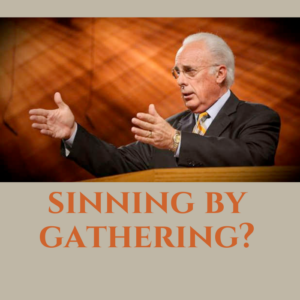
A lot of Christians have been watching the unfolding news headlines of what is happening in California and Pastor John MacArthur’s Grace Community Church (GCC). Many are asking some great questions, like, are John MacArthur, the elders of GCC, and the members of GCC sinning by meeting indoors in person, and thereby disobeying the governor’s order? Why couldn’t they just try to meet in other ways? And what about the lawsuit that GCC is bringing against the state of California? Is that biblical? Michelle and Amy discuss what the Bible has to say about this topic.
It’s our 50th episode! Thanks so much for listening!
Today: Does God care for His people in supernatural ways? Yes indeed, and it’s called Divine Providence.
Providence is a word that comes from Provide, or provision. God does provide for His people in ways we sometimes don’t recognize. But when we do see it, it’s an amazing thing and one that fills us with awe and wonder as we realize just how much He cares for us. Amy and Michelle head to Scripture for some amazing verses on how God has done this from the beginning of time.
What is worship? The Bible tells us it is so much more than simply singing God’s praises, but singing is part of how we worship.Worshiping God is the essence of our Christian life. To worship is to show reverence and adoration for a Holy God. The meaning of the New Testament Greek word most often translated “worship” (proskuneo) is “to fall down before” or “bow down before.” WHY do we worship? Amy and Michelle dig into Scripture for answers to the why and how of worship.
This episode isn’t exactly going to be “raindrops on roses and whiskers on kittens.” We thought we’d share a few of our favorite things with you. Some of them we hope will help you in your walk with the Lord, and some of them are just for fun!
How can we be wise and discerning when false teachers start telling the world that they’ve seen the light of the true Gospel of Jesus Christ? This happened recently when preacher Todd White surprised his audience by telling them that he repented for not giving them the whole Gospel all these years. Known for his seeker-friendly messages, psychic readings and leg-lengthening “miracles,” Todd White has a massive worldwide audience who heard the true Gospel one week, but a different message the next. Michelle and Amy encourage listeners to look to God for true repentance and fruit, rather than the words people say.
Is God all love, ALL the time? Yes! And His definition of love includes holiness, righteousness and wrath. In this episode we discuss how the Bible describes God’s love, and then share a few ways the world and even some Christians have a slightly distorted view of God’s love.
You may be painfully aware that public schools have long been infected with a radical agenda that is intentional and well thought out, planned and executed for more than a century without many of you even knowing it. If you have school-aged children and your reflexive thought whenever you hear the word “homeschooling” is, “I could never do that!,” give this episode a listen for practical tips on how to get started. And if you don’t have school-aged children, stick with us. You might be surprised at what you learn!